

Accredited investor regulations determine who can access venture capital opportunities, but these 1980s-era wealth thresholds exclude many financially sophisticated professionals from participating in the innovation economy's most promising investments. With global VC markets hitting $368 billion in 2024 and AI startups capturing 37% of all funding, these outdated barriers create a fundamental misalignment between regulatory intent and economic reality.
The artificial intelligence boom has supercharged returns across venture capital, yet professionals who actually understand these technologies remain locked out unless they meet arbitrary net worth requirements that have nothing to do with investment knowledge. Meanwhile, other jurisdictions are implementing more sophisticated frameworks that attract both capital and talent away from the United States.
Why Current Accredited Investor Rules Make No Sense
The math reveals the problem immediately. To qualify as an accredited investor today, you need either:
- Annual income of $200,000 ($300,000 for couples) for two consecutive years
- Net worth exceeding $1 million, excluding primary residence
- Certain professional certifications (added in 2020)
These thresholds haven't been adjusted for inflation since their creation. A $200,000 income in 1982 would equal roughly $600,000 today. Meanwhile, the average American home has appreciated far beyond the original $1 million net worth threshold, meaning homeowners in major metropolitan areas can qualify without any investment experience whatsoever.
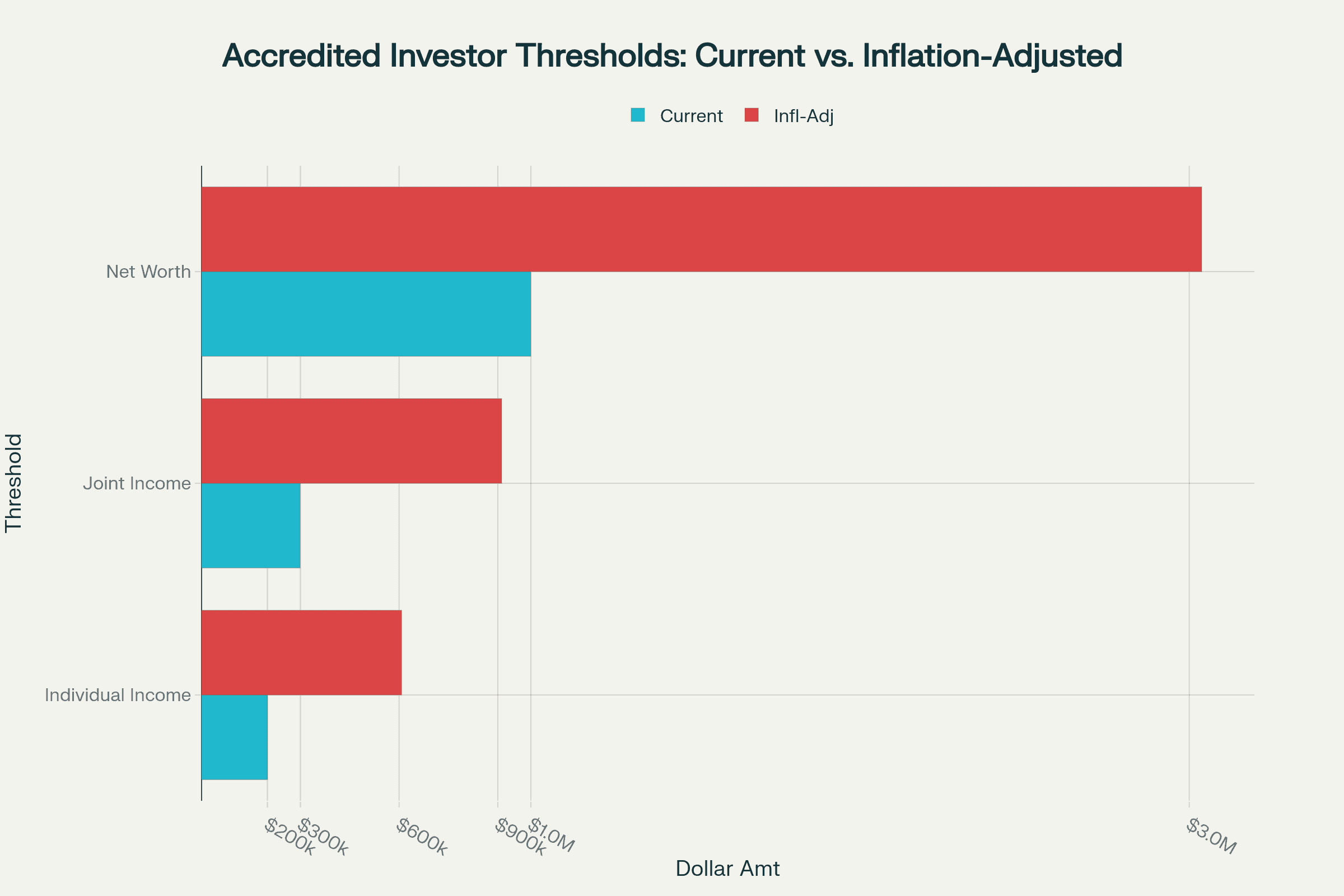 Current accredited investor thresholds are significantly below inflation-adjusted values, with net worth requirements 67% below what they should be if adjusted for inflation since 1982
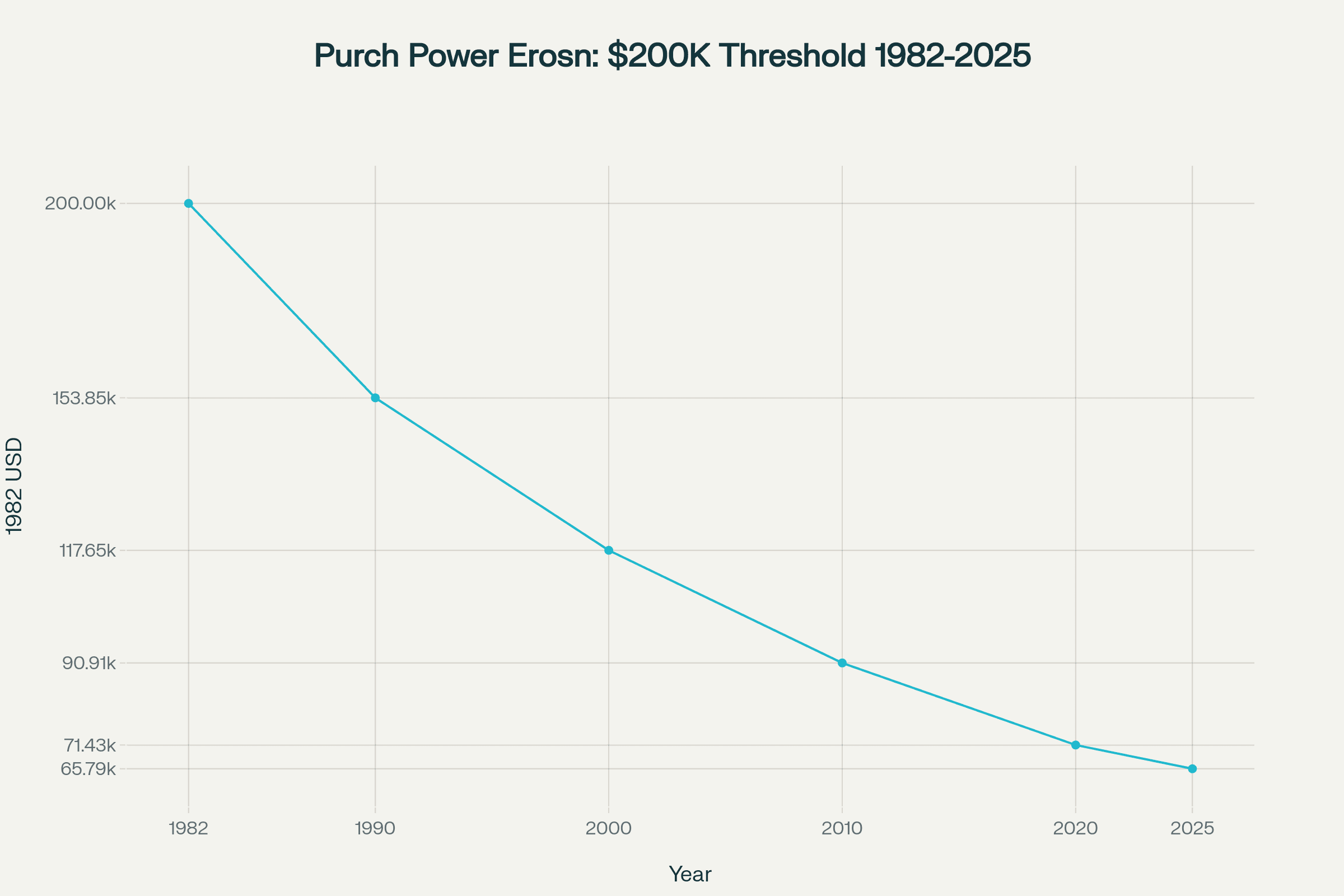 The real purchasing power of the $200,000 accredited investor income threshold has declined dramatically from 1982 to 2025, measured in constant 1982 dollars
The result? A cardiologist earning $180,000 who understands biotech companies can't invest in medical device startups, while someone who inherited $2 million but knows nothing about technology can fund AI ventures.
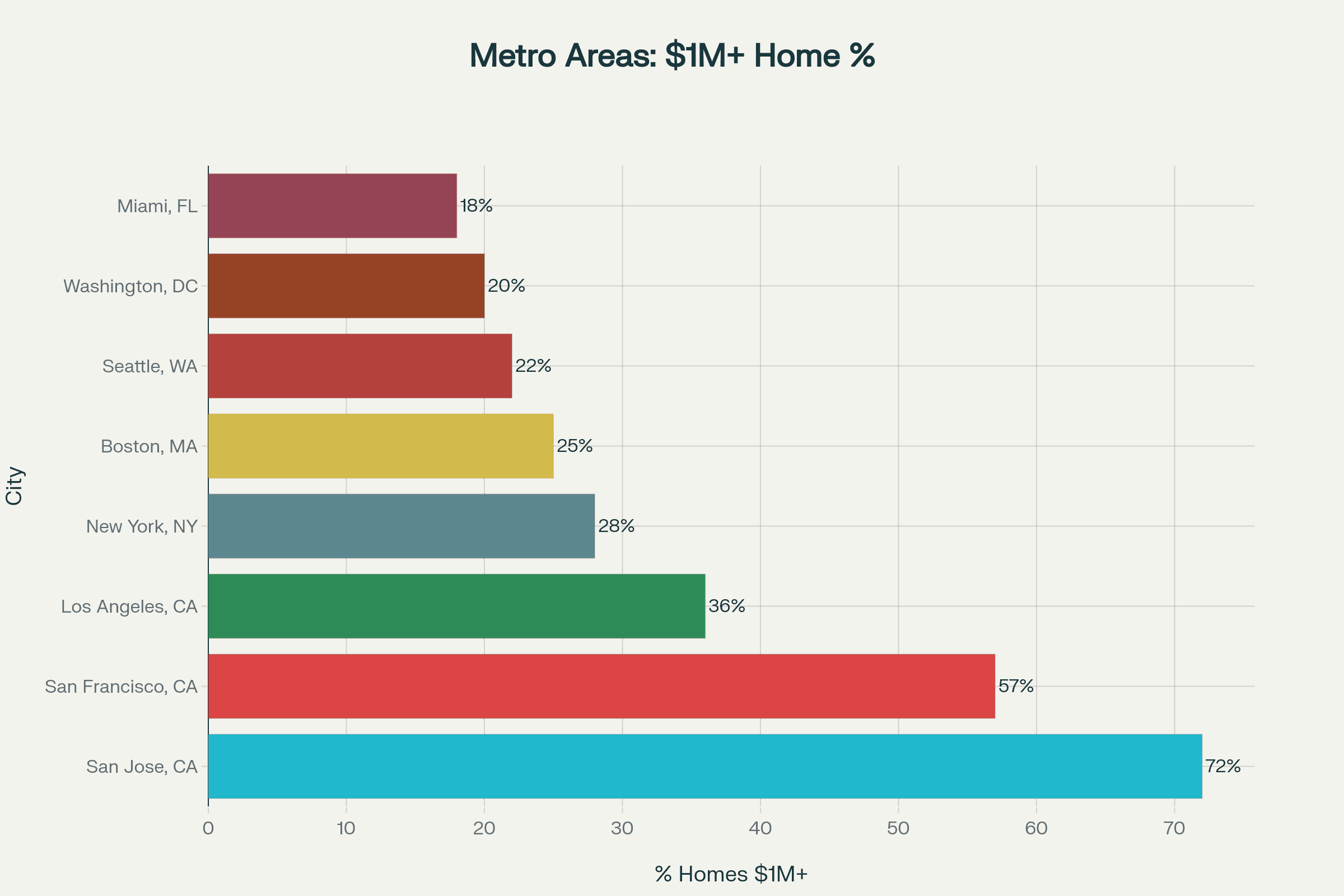 Percentage of homes valued over $1 million in major US metropolitan areas highlights the geographic bias in accredited investor qualification through real estate wealth
The Knowledge Gap That Regulators Finally Acknowledged
In 2020, the SEC made a crucial admission by expanding accredited investor criteria to include holders of Series 7, 65, or 82 licenses. This change acknowledged what financial professionals have long known: expertise matters more than wealth when evaluating complex investments.
The House of Representatives went further in June 2023, passing the Fair Investment Opportunities for Professional Experts Act. This legislation would recognize "professional knowledge through educational or professional experience" as qualification criteria.
But regulatory change moves slowly while market opportunities accelerate rapidly.
How Much Money Are We Actually Talking About?
The global venture capital market reached between $309-337 billion in 2024, with Q4 alone seeing $108.6 billion invested across 7,022 deals. Growth projections suggest a compound annual rate of 17.56% through 2033.
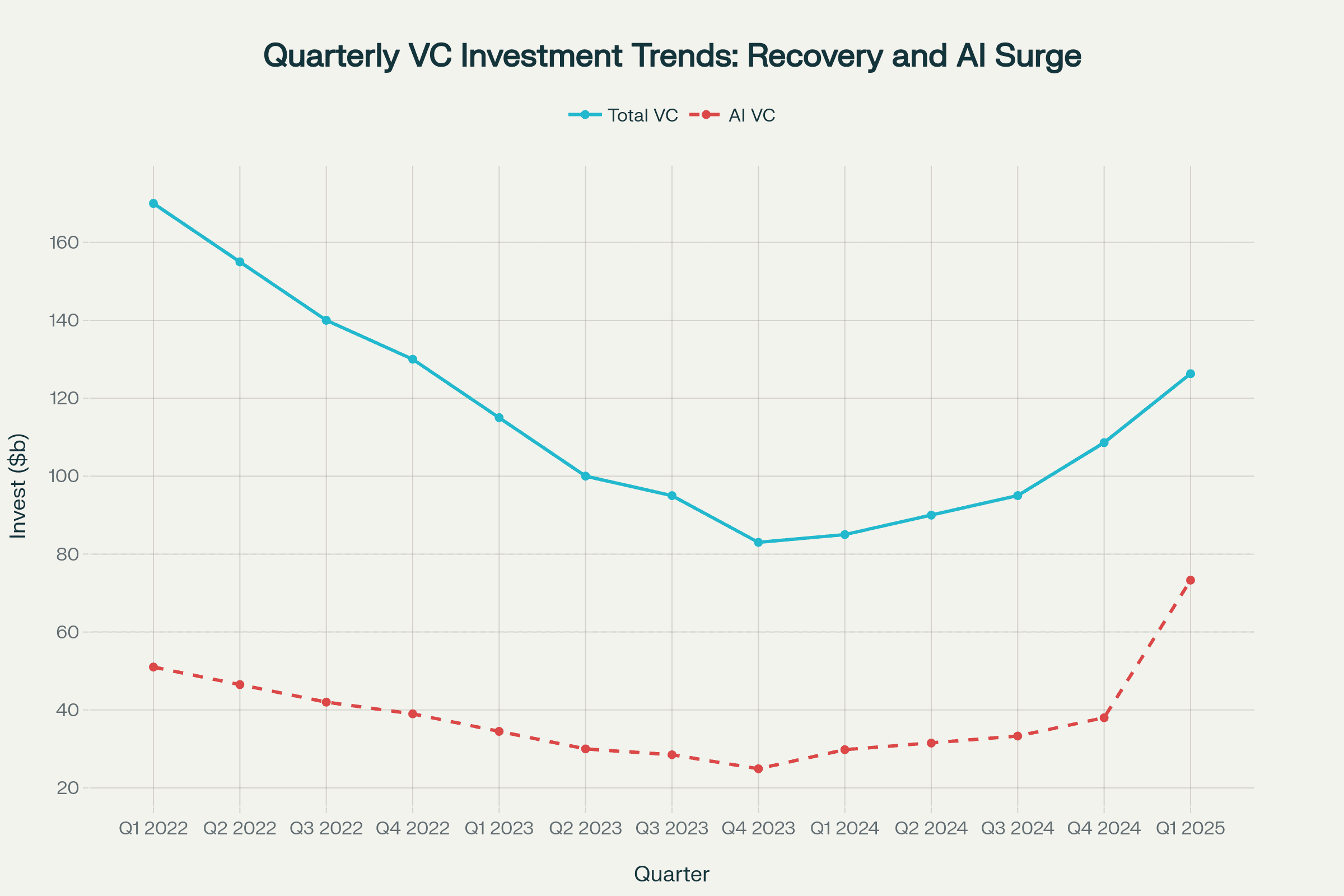 Quarterly venture capital investment trends show strong recovery and AI sector surge from 2022-2025, with Q4 2024 reaching seven-quarter highs
AI sector investments dominated headlines with mega-deals totaling over $32 billion in late 2024. Companies like Databricks raised record-setting $10 billion rounds, while Anthropic, OpenAI, and other AI pioneers commanded valuations that would have seemed impossible just five years ago.
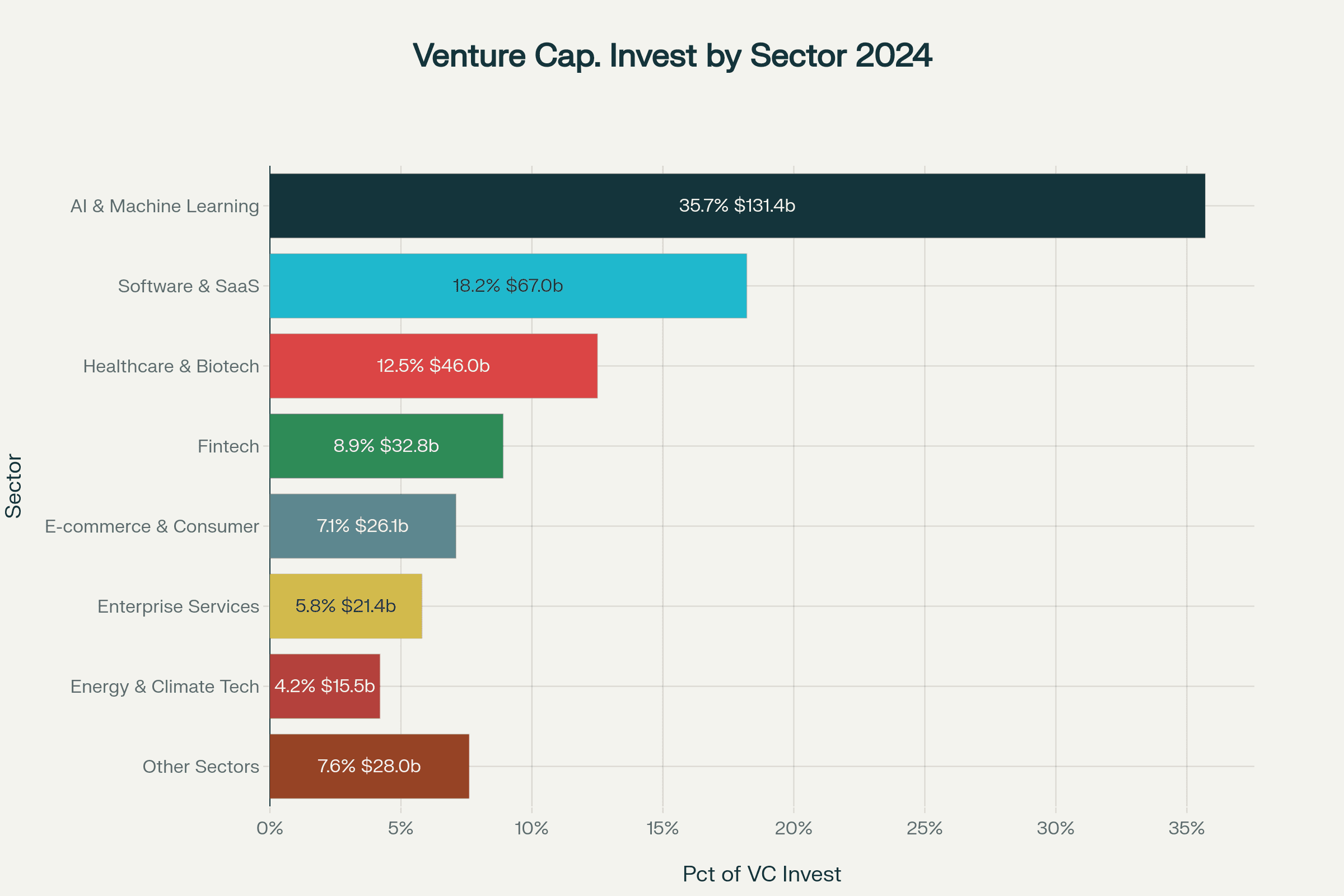 AI commanded over one-third of total venture capital investment in 2024, demonstrating the sector's dominance in driving market growth
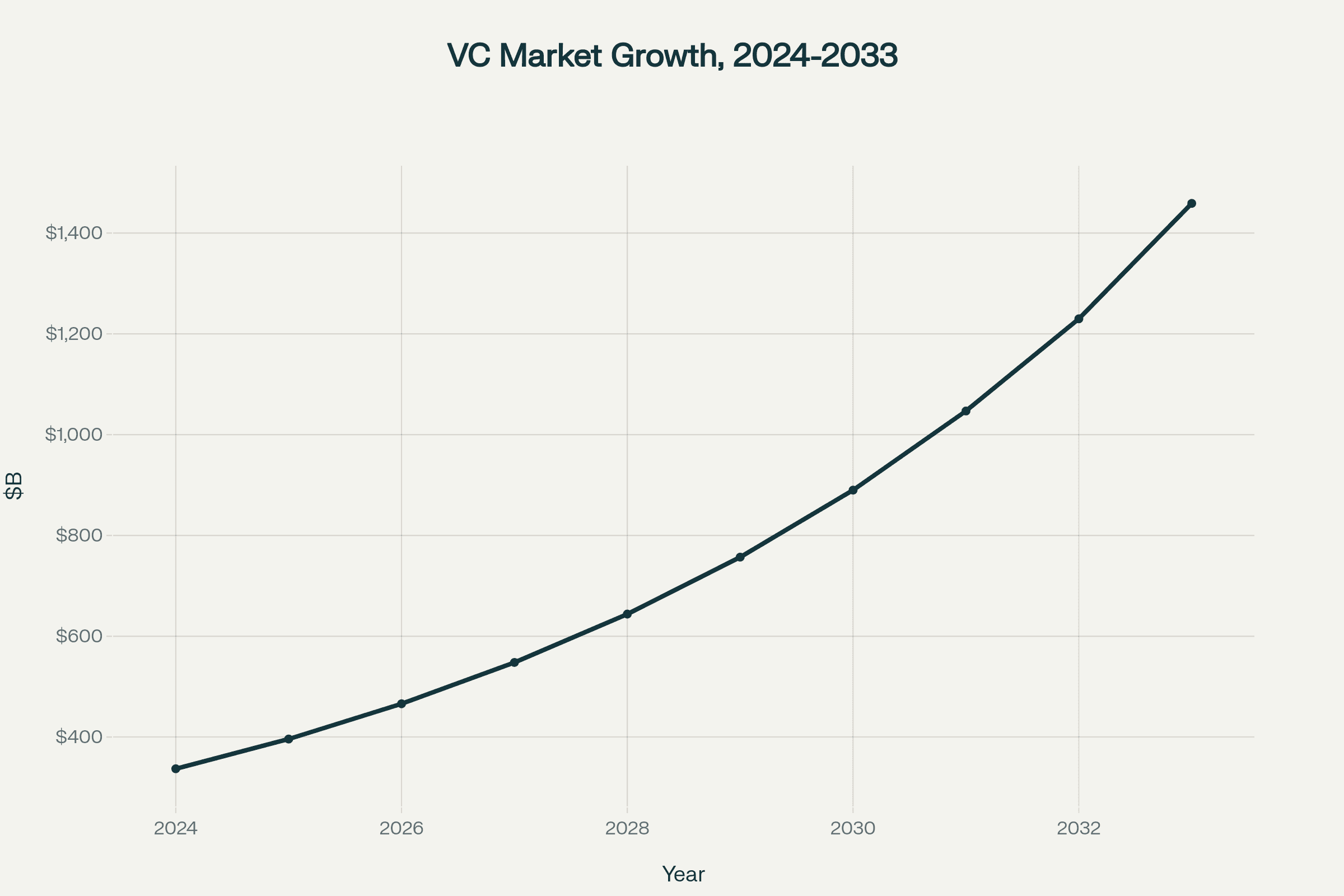 The global venture capital market is projected to grow at a 17.56% compound annual growth rate through 2033, reaching unprecedented scale
These aren't speculative lottery tickets. They're investments in the foundational technologies reshaping every industry from healthcare to finance to manufacturing.
The New Platforms Changing Everything
Smart entrepreneurs have already begun working within existing regulations to create more accessible VC opportunities:
Deal-by-Deal Investment Platforms like VU Venture Partners now allow accredited investors to participate in individual funding rounds with minimums as low as $5,000. This represents a 200x reduction from traditional VC fund minimums.
Pre-IPO Secondary Markets such as Hiive provide access to shares in companies like SpaceX, Anthropic, and Stripe with $25,000 minimums. These platforms offer liquidity before public offerings, capturing value that previously went only to institutional investors.
Multi-Asset Alternative Platforms including EquityMultiple and CrowdStreet create diversified portfolios spanning venture capital, real estate, and other alternative investments with entry points starting at $5,000.
Fund-of-Funds Structures like Esinli Capital's approach provide systematic exposure across geography, vintage years, sectors, and fund structures. Our proprietary EcoCapture™ methodology targets 20-30% IRR while reducing single-investment risk through professional diversification.
What Smart Reforms Would Look Like
The path forward requires acknowledging that financial sophistication comes in many forms:
Inflation-Adjusted Thresholds: Update income requirements to $600,000 and net worth to $3 million to reflect actual purchasing power from the 1980s baseline. This isn't radical—it's basic mathematics.
Expanded Knowledge Pathways: Create clear qualification routes for professionals with relevant education or experience. A computer science PhD with a decade in tech likely understands AI investments better than most millionaires.
Tiered Access Systems: Instead of binary qualified/unqualified classifications, create graduated access levels. Allow smaller investments for moderately qualified individuals while preserving higher minimums for complex instruments.
Enhanced Education Requirements: Develop standardized educational programs that demonstrate investment readiness. Professional development shouldn't be limited to those who already have wealth.
International Regulatory Competition: America Falls Behind
While the United States clings to Depression-era investment restrictions, other jurisdictions are implementing sophisticated frameworks that attract global capital and talent. The European Union's Markets in Crypto-Assets (MiCA) regulation, which became fully operational in December 2024, exemplifies how modern regulators can provide robust oversight without excluding knowledgeable participants based solely on wealth.
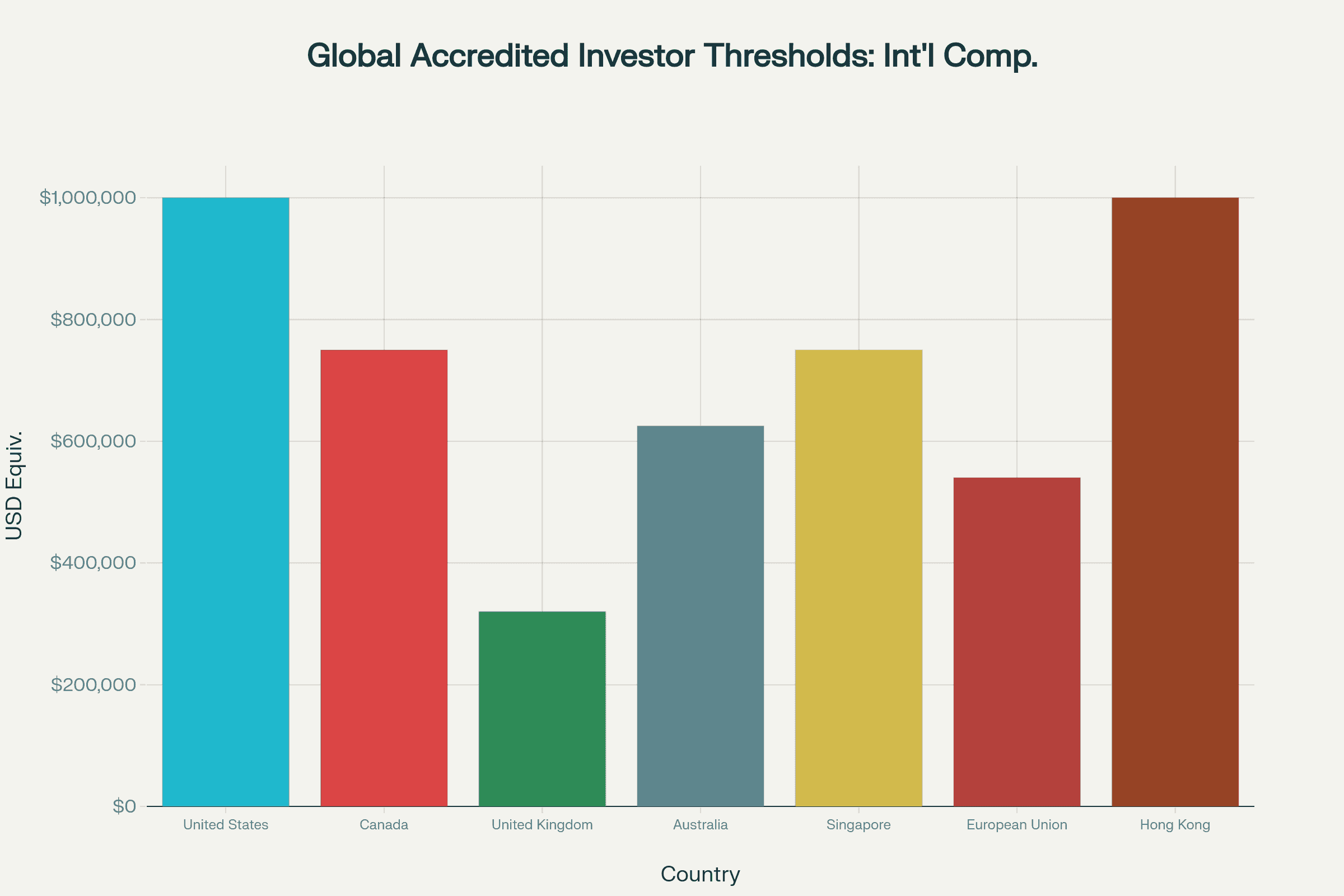 The United States maintains among the world's most restrictive accredited investor thresholds, potentially limiting competitiveness in global private capital markets
The EU's Sophisticated Approach
MiCA creates uniform rules across all 27 EU member states with "passporting rights" for service providers, eliminating regulatory fragmentation while focusing on activity-based regulation rather than wealth-based exclusion. This approach recognizes that financial sophistication stems from knowledge and experience, providing proportionate oversight without arbitrary barriers.
The UAE's Competitive Alternative
The United Arab Emirates has emerged as a compelling destination for investment professionals, particularly through the Dubai International Financial Centre (DIFC). Recent regulatory reforms have reduced capital requirements for money managers while streamlining processes—fund notifications complete within 2-5 business days compared to lengthy American procedures. Over 70 funds managing assets exceeding $1 billion now operate from the UAE, demonstrating how business-friendly regulation attracts global talent.
The Brain Drain Reality
This regulatory arbitrage is creating measurable talent flight from American financial centers. Investment professionals increasingly evaluate regulatory frameworks when making location decisions, with sophisticated individuals relocating to jurisdictions offering better investment access. When experienced professionals leave, they take with them networks, industry knowledge, mentorship capacity, and innovation potential—creating compounding negative effects on American market efficiency.
The Economic Stakes: Beyond Individual Access
The current system's failures create cascading economic inefficiencies that extend far beyond individual investment access. When regulatory barriers exclude knowledgeable participants while including wealthy but unsophisticated investors, multiple problems compound:
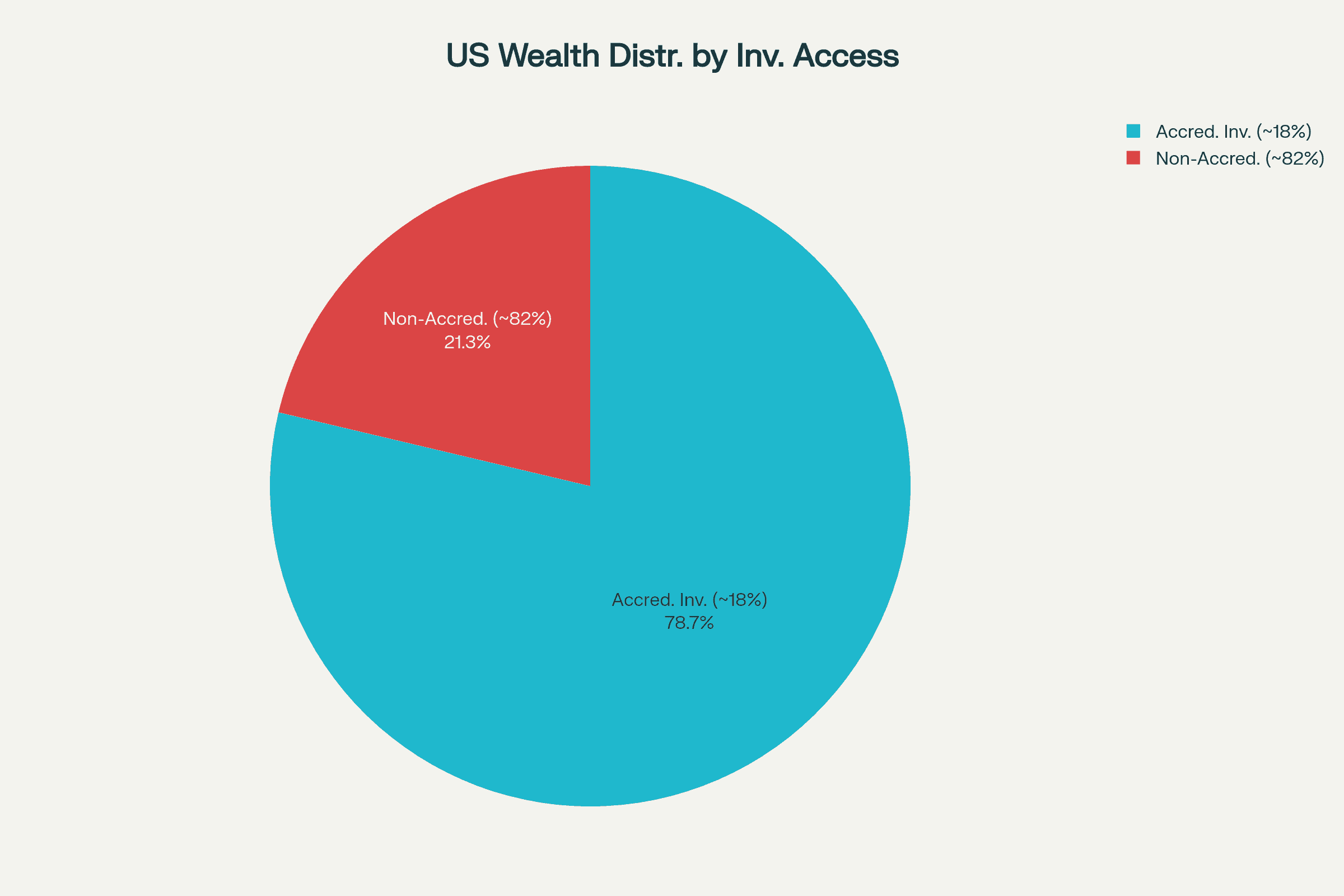 Just 18% of households (accredited investors) control 79% of total private wealth, demonstrating how investment restrictions concentrate wealth-building opportunities among existing elites
Capital Allocation Inefficiency Research consistently demonstrates that sophisticated investors play crucial roles in information acquisition and price discovery. Excluding knowledgeable professionals reduces due diligence quality and leads to suboptimal capital allocation decisions, ultimately harming the startups and innovations these regulations supposedly protect.
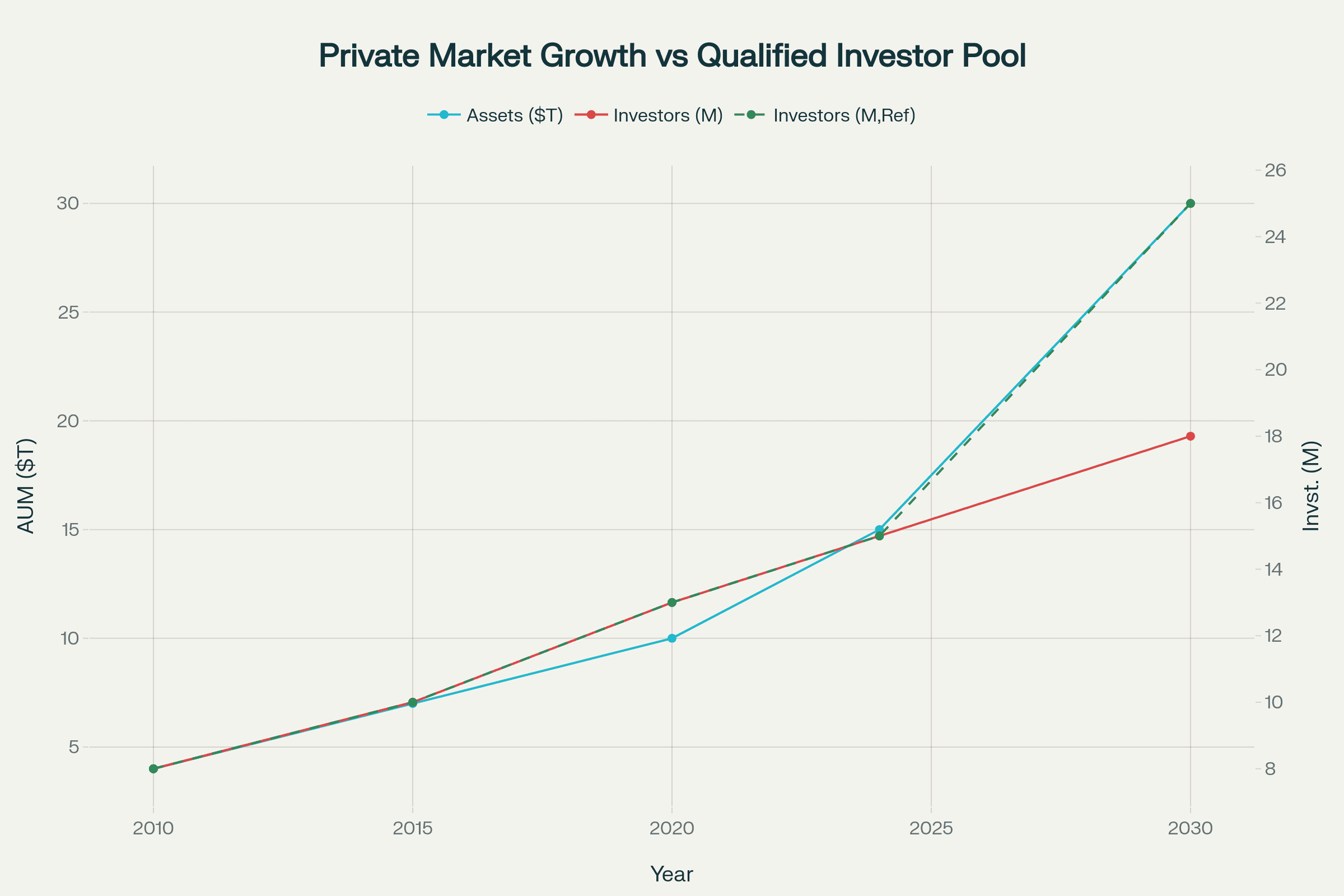 Private market assets are projected to double by 2030 while the qualified investor pool remains constrained by outdated wealth-only criteria, creating a growing capital formation bottleneck
Innovation Ecosystem Damage Private markets now raise more capital than public offerings, yet 90% of American households cannot participate in this critical funding ecosystem. This exclusion reduces funding pools for startups, creates geographic concentration among wealthy coastal elites, and limits sector diversity by excluding professionals with relevant expertise.
Wealth Concentration Acceleration The system actively reinforces inequality by reserving the most lucrative investment opportunities for those who already have significant assets. This creates a self-perpetuating cycle where wealth generates more wealth through exclusive access to high-return investments, while middle-class professionals are confined to lower-return public markets.
Democratic Institutional Risk Cross-national research identifies income inequality as "one of the strongest predictors of where and when democracy erodes." By concentrating wealth-building opportunities among existing elites, current investment regulations may contribute to broader institutional instability.
The Comprehensive Reform Framework
Effective reform requires coordinated changes across multiple dimensions rather than incremental adjustments. Based on extensive analysis of successful international models and Congressional proposals, a comprehensive framework should include:
1. Inflation-Adjusted Thresholds Update wealth requirements to reflect actual 1982 purchasing power: $666,000 individual income, $3.33 million net worth. Implement automatic five-year adjustments to prevent future regulatory drift.
2. Knowledge-Based Qualification Pathways Expand professional recognition beyond current FINRA licenses to include:
- Certified Financial Planners (CFPs) and Chartered Financial Analysts (CFAs)
- Industry professionals with demonstrable expertise in relevant sectors
- Advanced degree holders in finance, economics, engineering, medicine, or related fields
- Individuals passing SEC-administered competency examinations
3. Tiered Access Systems Replace binary qualification with graduated levels:
- Limited Access: Reduced thresholds with 10% net worth investment caps for lower-risk offerings
- Moderate Access: Current thresholds or knowledge qualification with 25% net worth caps
- Full Access: High net worth ($2+ million) or advanced qualifications without restrictions
4. Enhanced Education and Protection Develop standardized investor readiness programs covering risk assessment, portfolio theory, due diligence processes, and regulatory environment. Successful completion qualifies individuals for specific tiers regardless of wealth level.
Strategic Positioning for Regulatory Change
For financially sophisticated professionals currently excluded by wealth thresholds, several immediate strategies can provide preparation for upcoming regulatory changes:
Immediate Qualification Pathways Professional certification offers the most direct route to current qualification. Series 7, 65, or 82 licenses provide immediate accredited investor status regardless of net worth, while CFA and CFP certifications demonstrate investment knowledge that will likely qualify under proposed reforms.
Platform Access Within Current Rules Emerging platforms operating within existing regulations offer immediate exposure to institutional-quality opportunities. Deal-by-deal platforms, pre-IPO secondary markets, and systematic fund-of-funds provide access starting at $5,000-$25,000 minimums while Congress debates broader reform.
Educational Investment Develop sector-specific expertise in areas where you want to invest. A computer scientist building AI knowledge, a physician understanding biotech, or an engineer grasping clean energy technologies will be better positioned when knowledge-based qualifications become available.
Strategic Financial Planning Structure finances to meet existing thresholds while building investment sophistication. This dual approach ensures qualification under current rules while preparing for an expanded framework that values knowledge alongside wealth.
Esinli Capital: Demonstrating the Future Today
While regulatory reform advances through Congress, Esinli Capital operates as a proof-of-concept for how venture capital access should work. Our approach demonstrates that institutional-quality investment opportunities can be both accessible and professionally managed within existing frameworks.
Systematic Democratization Our $10,000 minimum represents a 100x reduction from traditional VC fund minimums while maintaining professional portfolio construction. The EcoCapture™ methodology utilizes algorithmic diversification across geography, vintage years, sectors, and fund structures—providing exposure that individual investors couldn't achieve independently.
Evidence-Based Performance We analyze over 180 million data points monthly to identify successful investment patterns. Research demonstrates that systematic diversification across 25+ funds improves success probability from 74% to 91% while reducing failure probability from 26% to 9%. This data-driven approach targets 20-30% IRR through professional management rather than guesswork.
Institutional Infrastructure for Individual Investors Our platform provides quarterly reporting, 24/7 analytics, and transparent fee structures typically reserved for institutional investors. By handling due diligence, portfolio construction, and ongoing monitoring, we enable qualified professionals to access VC returns without becoming full-time venture capitalists.
This model validates the core premise behind regulatory reform: when professional management combines with appropriate minimums and sophisticated investors, the result is expanded access without compromised protection.
The Urgency of American Leadership
The modernization of accredited investor standards represents more than regulatory housekeeping—it's about maintaining America's position as the global leader in innovation financing. While other jurisdictions implement sophisticated, accessible frameworks that attract international talent and capital, the United States risks falling behind countries that provide more rational investment access.
The European Union's MiCA framework and the UAE's business-friendly regulations demonstrate how modern oversight can coexist with expanded access. As these jurisdictions capture global financial talent through regulatory innovation, American rigidity becomes a competitive disadvantage rather than protective wisdom.
Smart platforms have already proven that technology and creative structuring can democratize venture capital access while maintaining appropriate investor protections. Congressional momentum with the 397-12 House vote shows bipartisan recognition that change is necessary. The question is whether implementation will occur fast enough to prevent further brain drain and capital flight to more hospitable regulatory environments.
At Esinli Capital, we believe the future belongs to sophisticated investors who understand both technology and markets, regardless of their current wealth level. Our EcoCapture™ methodology proves that institutional-quality venture capital can be both accessible and professionally managed, serving as a bridge to the more rational regulatory framework that's inevitable.
The revolution in investment access is already underway. Market forces, technological innovation, and political momentum align toward expanded qualification based on knowledge rather than arbitrary wealth thresholds. The only question is whether you'll be positioned to benefit when these changes fully materialize.
The barriers are falling. The opportunities are real. The time to prepare is now.


